
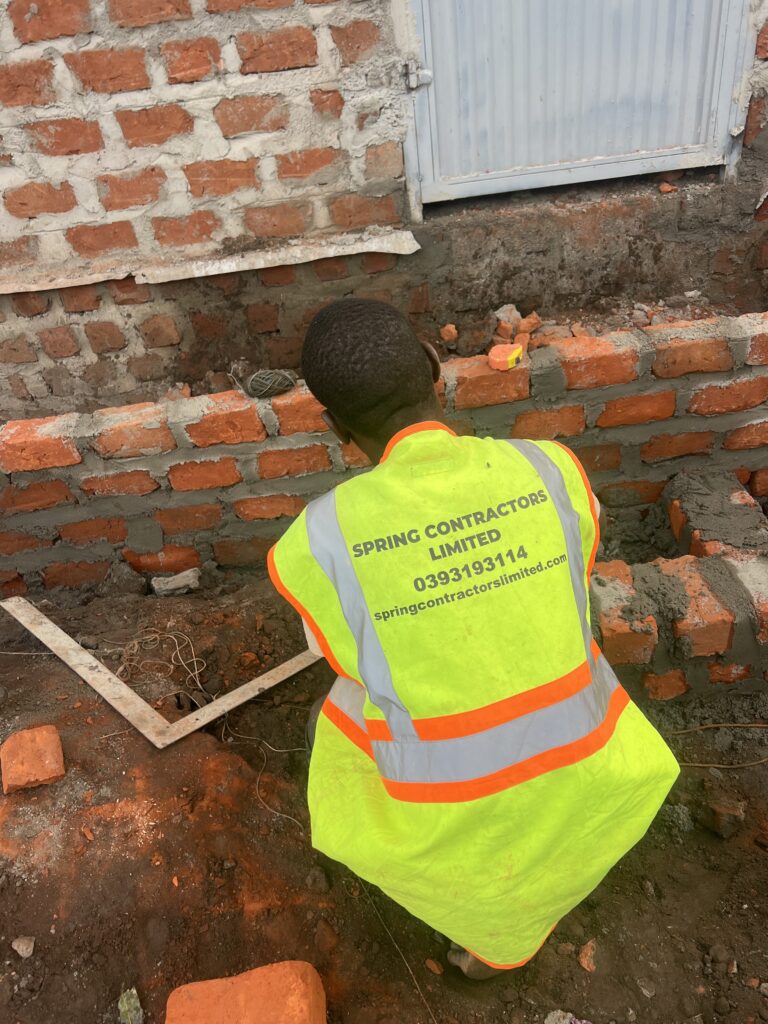
Cement & Concrete Mixing Ratios determine the strength and longevity of any structure built in Kampala, Wakiso, or Entebbe. Using the correct proportions of cement, sand, and aggregate is the only way to achieve a high-quality concrete grade. Whether you are building a perimeter wall in Kira or a commercial plaza in Najjera, precise mixing is non-negotiable. This guide explains the essential ratios needed to satisfy the Building Control Act 2026.
1. Understanding Standard Concrete Grades
Every professional BOM (Bill of Quantities) specifies a particular strength for different parts of a building. For domestic projects, you usually aim for Class 20 or Class 25 concrete.
The most common ratio for load-bearing columns and beams is 1:2:4. This means you mix one part cement, two parts sand, and four parts stone. Using this ratio ensures your slab can support the intended weight without cracking. If you need expert structural advice or professional execution for your next project, Spring Contractors Limited offers specialized building services across Uganda.
2. The Importance of the Slump Test
The water-to-cement ratio is just as important as the dry ingredients. Too much water weakens the final product, even if your cement & concrete mixing ratios are technically correct.
Engineers perform a slump test on-site to measure the consistency of the wet concrete. A high slump indicates too much water, which leads to shrinkage and structural failure. Proper testing protects your property valuation and ensures the building stands for generations.
3. Securing Your Construction Materials
High-quality cement is expensive and often a target for theft on sites in Wakiso and Kampala. Protecting your materials is essential to maintaining your budget and the integrity of your mix.
Implement strict access control at your storage facility to prevent unauthorized removal of bags. Effective monitoring and a clear perimeter fence act as a powerful deterrence against site “leakage.” To secure your site with advanced surveillance tech, CCTV Tech Solutions provides robust security systems designed for Ugandan construction environments.
4. Real Estate Value and Land Tenure
The quality of your construction directly impacts your long-term investment. Buildings constructed with the wrong cement & concrete mixing ratios often suffer from dampness and structural cracks.
These issues make it difficult to sell or lease the property later. Before you build, ensure your land tenure is secure and the title has no encumbrance. If you are looking for prime acreage or need a professional valuation for a developed property, Lighthouse Properties helps investors find secure opportunities in the Ugandan market.
5. Mixing Ratios for Plaster and Mortar
Not all tasks require the high-strength mix used for slabs. For wall plastering, a ratio of 1:3 or 1:4 (cement to sand) is standard in Entebbe and Kira.
Mortar for laying bricks usually requires a 1:5 or 1:6 ratio. Always use clean, sharp sand to ensure the mortar bonds correctly to the blocks. Proper mixing at every stage keeps your project compliant with the Building Control Act 2026 and avoids costly rework.
Conclusion: Cement & Concrete Mixing Ratios
Building a safe and durable structure requires strict adherence to professional standards. By mastering cement & concrete mixing ratios, you protect your capital and your reputation as a developer. Whether you are pouring a foundation in Kampala or finishing a wall in Najjera, never compromise on the quality of your mix. Following these cement & concrete mixing ratios ensures your investment remains structural sound and highly valuable for years to come.